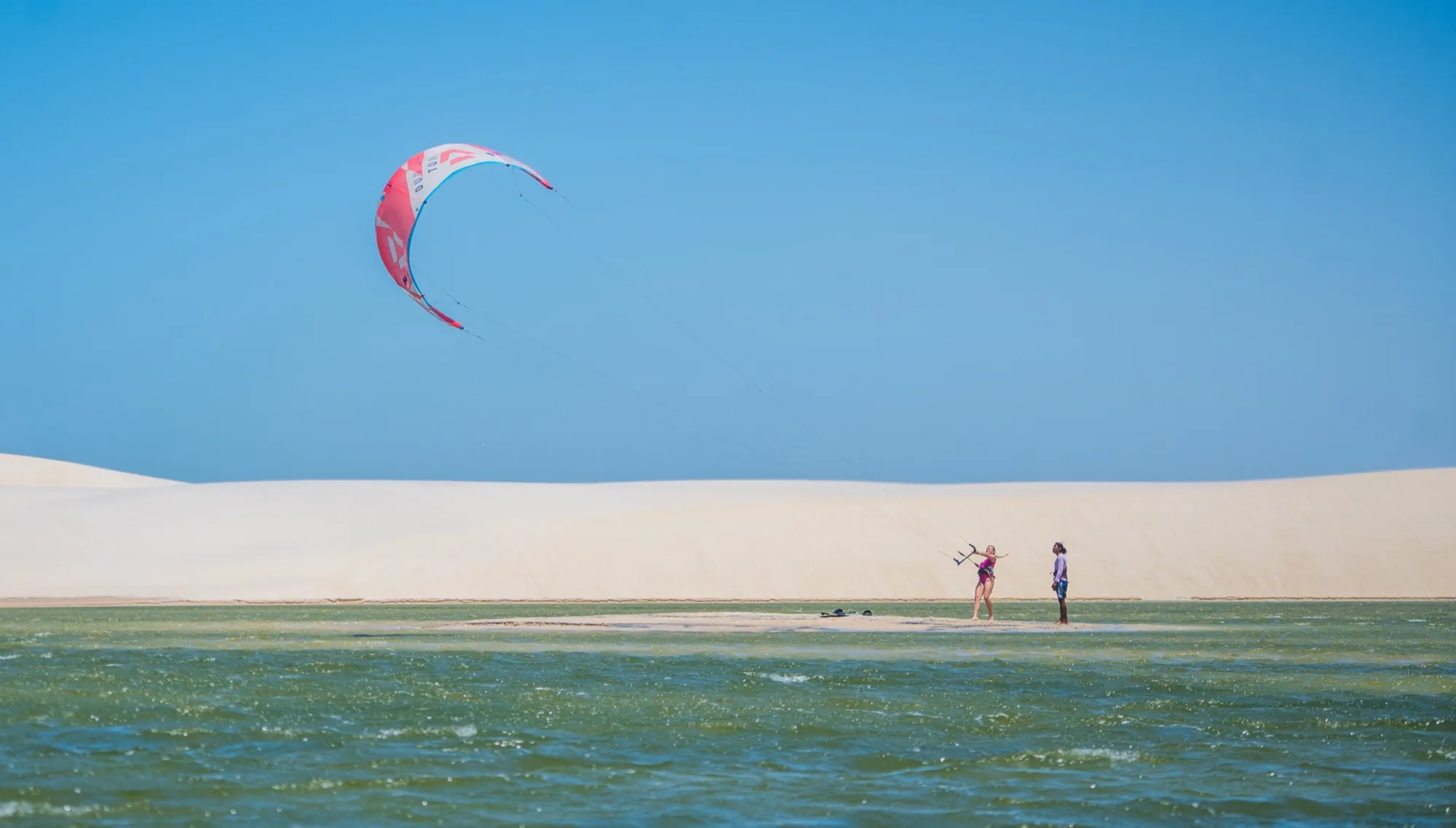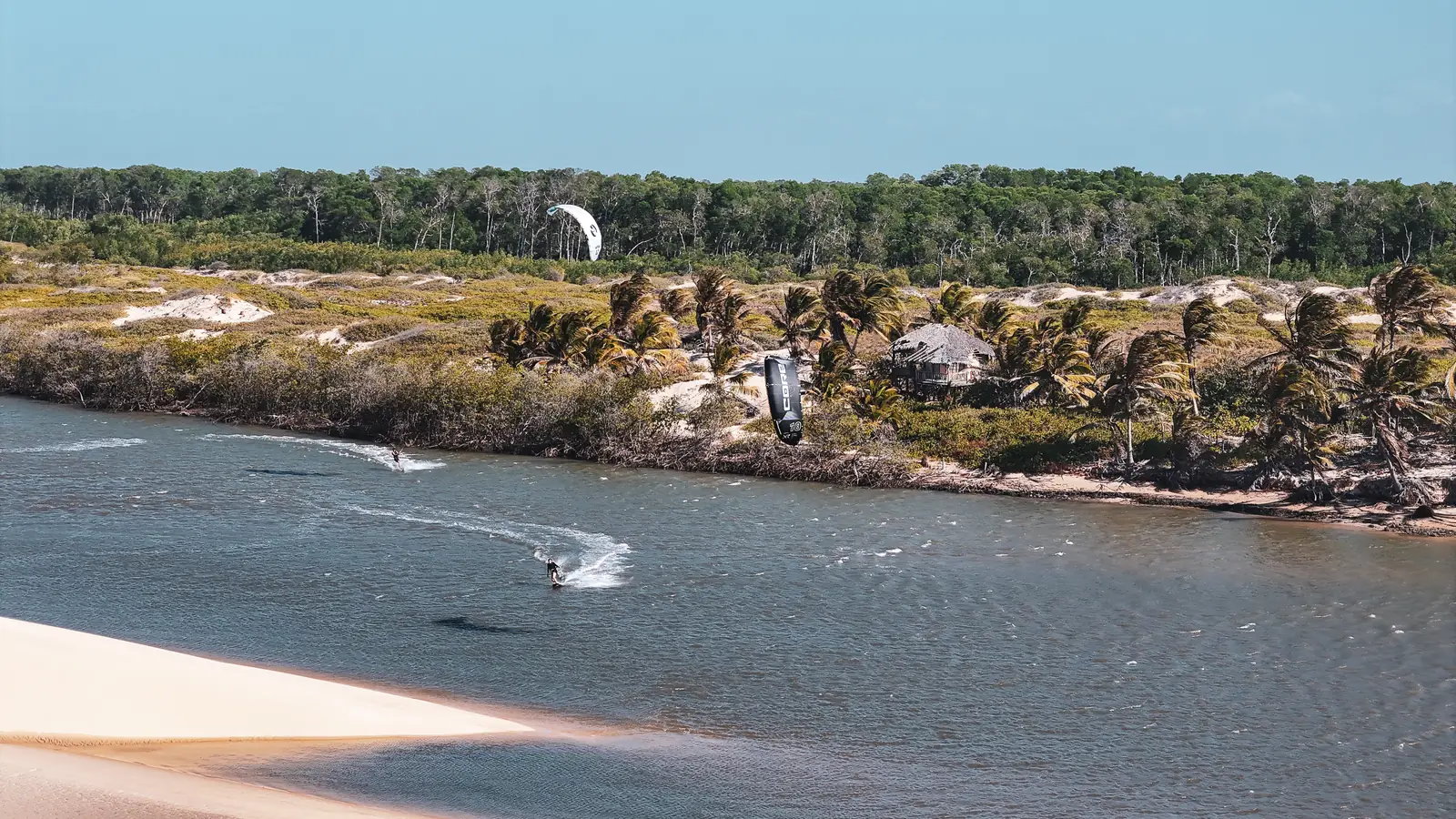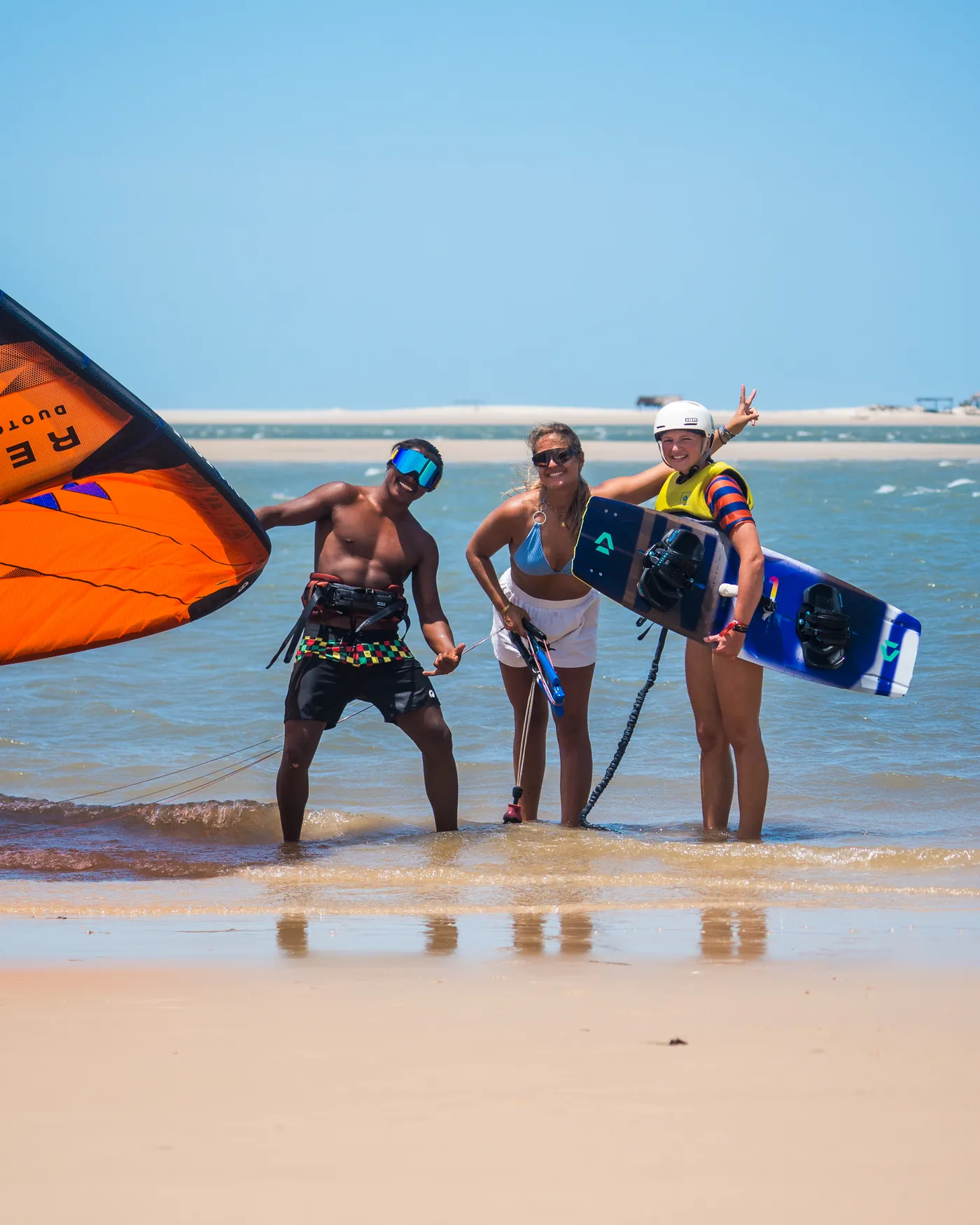

Brazil is one of those places that gets into a kiter's head long before they book anything. The lagoons, the dunes, the trade winds that blow for months without a rest day. It sits on most serious riders' lists, and for good reason.
But once you start planning, the options split into two distinct formats — and they're not the same thing. Kite camps and small-group kitesurf travel both get you to Brazil. What happens when you arrive is where they diverge.
What a kite camp is
A kite camp in Brazil is typically a structured operation built around big groups. Sessions run on a schedule. Accommodation and coaching with a random coach are included. The whole thing is designed to reduce variables and maximise time on the water with guidance.
For the right rider, that's exactly what they need. Kite camps work well when you're learning to kite, returning after a long break, or want a structured progression framework across a week. There's a safety net, there's a daily rhythm, and the social environment is organised around people of all levels.
What it doesn't deliver: access to remote spots, small-group dynamics, or the sense that the trip was designed around you rather than a fixed programme.
What a small-group trip offers
A small-group kitesurf expedition is a different proposition from the ground up.
The group is capped — in our case, eight riders maximum. Not because it sounds exclusive, but because that's the number at which logistics stay tight, sessions stay personal, and the dynamic actually resembles a trip with friends rather than a structured course. Beyond eight, you're back to camp territory regardless of what the brochure says.
The riders in the group are intermediate to advanced. No one is waiting for a beginner lesson to finish before heading out. No one is held back by another rider's skill ceiling. The water time is shared, not rationed.
The pro riders on a Local Secrets XP expedition are there as part of the group — not as coaches running a syllabus. Val Garat (French freestyle world champion) rides alongside you. You watch how he reads conditions, how he sets up a session, how he adjusts. That kind of learning is osmotic and it goes deeper than an hour of structured coaching ever will.
Logistics — transfers, accommodation, sessions, local knowledge — are taken care of. But the format is flexible. If conditions shift and there's a better lagoon forty minutes away, that's where you go. A kite camp can't do that. Its infrastructure is fixed.
Who each format suits
Makes sense if you:
- checkAre a total beginner and have no pressure on progressing fast
- checkWant daily structured coaching and clear progression markers
- checkPrefer a large group of random people
- checkHave a limited budget
Makes sense if you:
- checkAre a beginner or any level, who wants to progress quickly and learn from the best
- checkWant to explore a destination rather than just satellite it
- checkValue the quality of the people you're travelling with as much as the conditions
- checkWant access to spots that aren't on the map
- checkValue true connections and deep cultural experiences
The honest distinction: kite camps are for developing your riding. Small-group expeditions are for experiencing somewhere properly, alongside people who know what they're doing.
The Atins context
Most kite camps in Brazil operate in the northeast corridor — Cumbuco, Jeri, Preá. These are solid spots with reliable wind, good infrastructure, and well-worn logistics.
Atins is something else entirely.
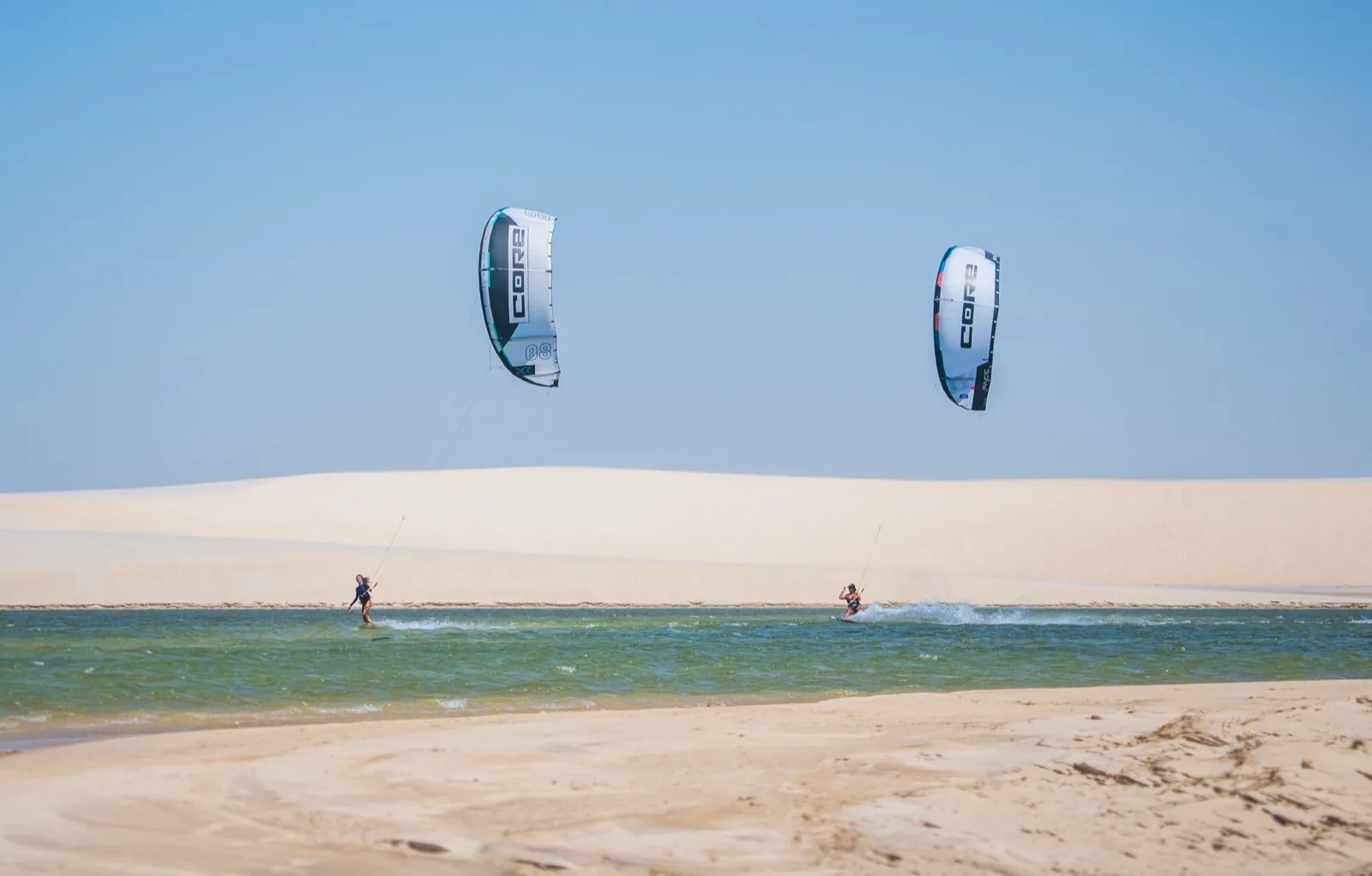
It sits at the eastern edge of Lençóis Maranhenses National Park, a protected landscape of white dunes and freshwater lagoons that shifts with the rainy season. There's no bridge into the village — access changes depending on the time of year between a dirt track and a boat crossing. There is no kite camp infrastructure here. No gear hire shop. No beginner lesson programme.
What there is: some of the most visually extraordinary kiting on the planet. Long lagoon sessions with nobody else in the water. Trade winds that arrive reliably from July through January, peaking in the August–November window. Warm, flat water ringed by dunes. A village that hasn't been optimised for tourism.
This is precisely why the Local Secrets XP Brazil expedition is structured as a small group rather than a camp. Atins doesn't support the camp model — and that's what makes it worth going to.
Val Garat leads the October expedition as a riding partner and guide, not an instructor. The sessions are built around conditions, not a timetable. The group is small enough that every decision — which lagoon, which tide window, which afternoon — gets made with everyone in mind.
There is also, for those who make it this far, the particular satisfaction of being somewhere that most kiters have never been, in a format that makes the most of it. You can read more about what the expedition involves on the Brazil expedition page.
Are you there to train, or to ride?
If you're weighing up kite camp Brazil options against a small-group expedition, the question to ask is simple: are you there to train, or are you there to ride?
Training has a place. But if you're reading this, you probably already know how to kite. You want Brazil — the real version, not the tourist infrastructure version — with people who match your level and a format that gets out of the way.
The October Atins expedition runs with a maximum of eight riders. Val Garat is on the water with the group throughout. Accommodation, transfers, and sessions are all handled.
Brazil · Atins
Eight riders maximum, world-champion riders in the water with you, and a format built around the conditions.
Local Secrets XP runs small-group kitesurf expeditions to Atins/Lençóis Maranhenses, Mozambique, Egypt, and Cape Town. Groups capped at 8. For full details on the Brazil expedition, visit the expedition page.