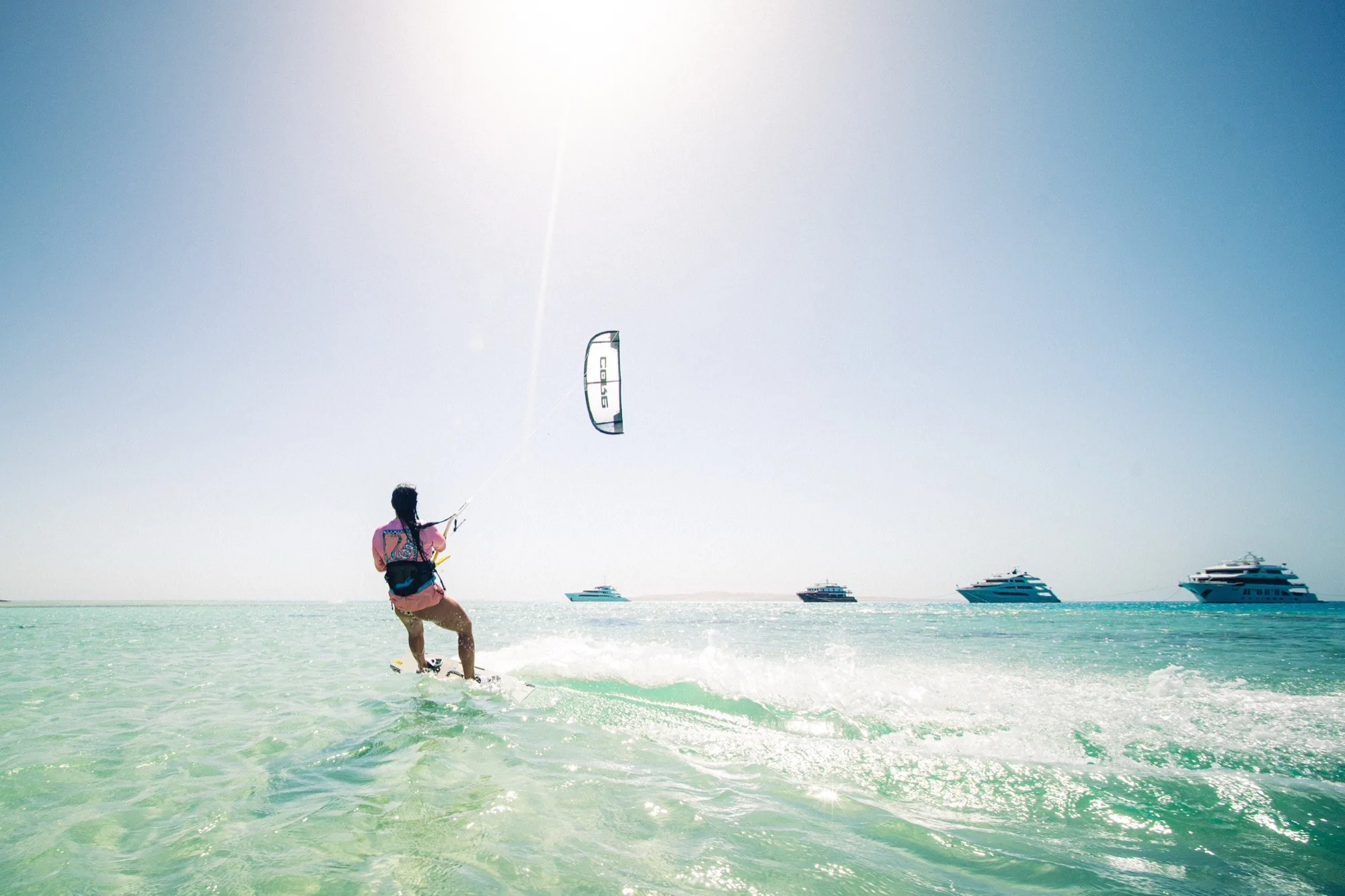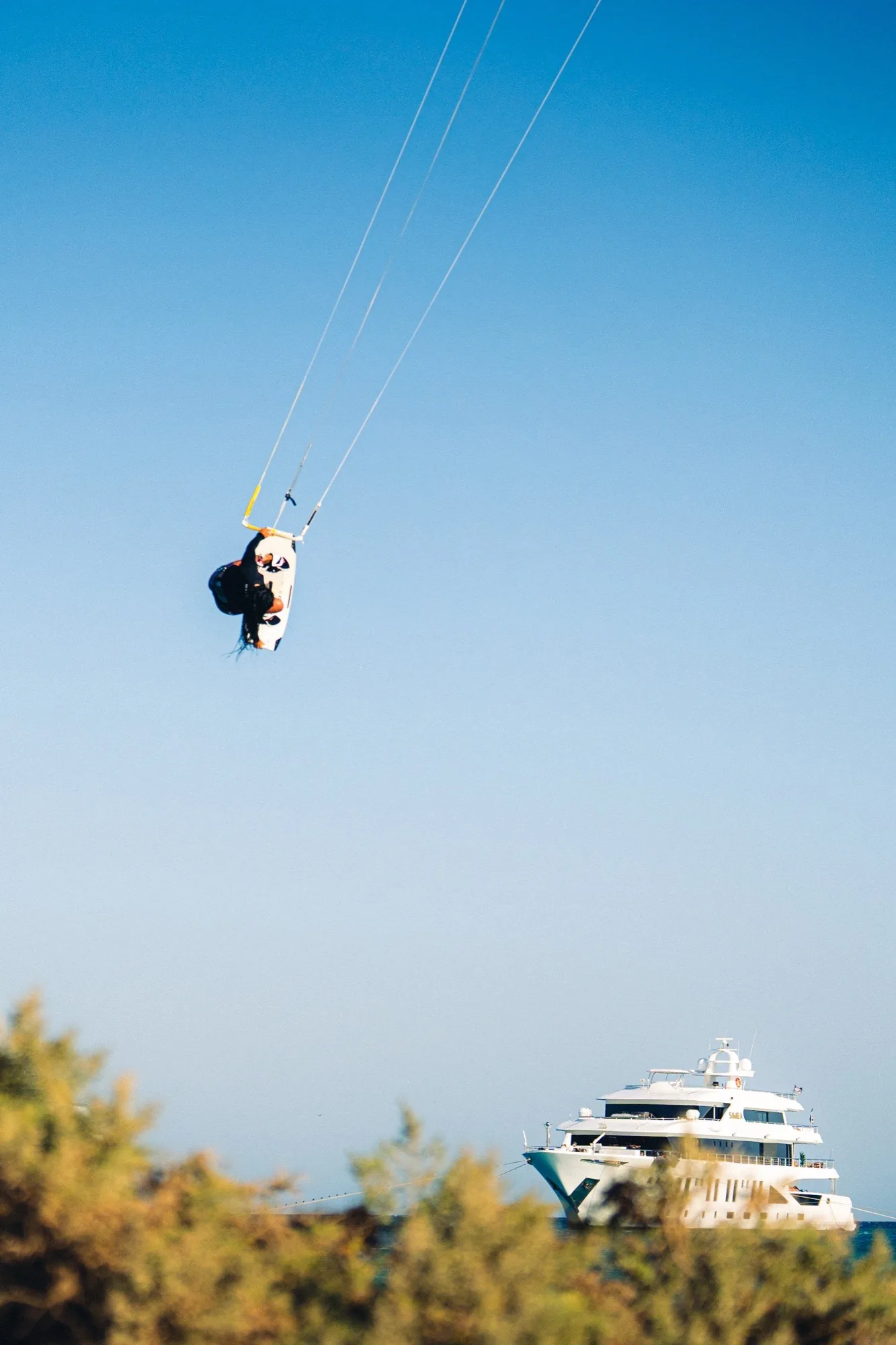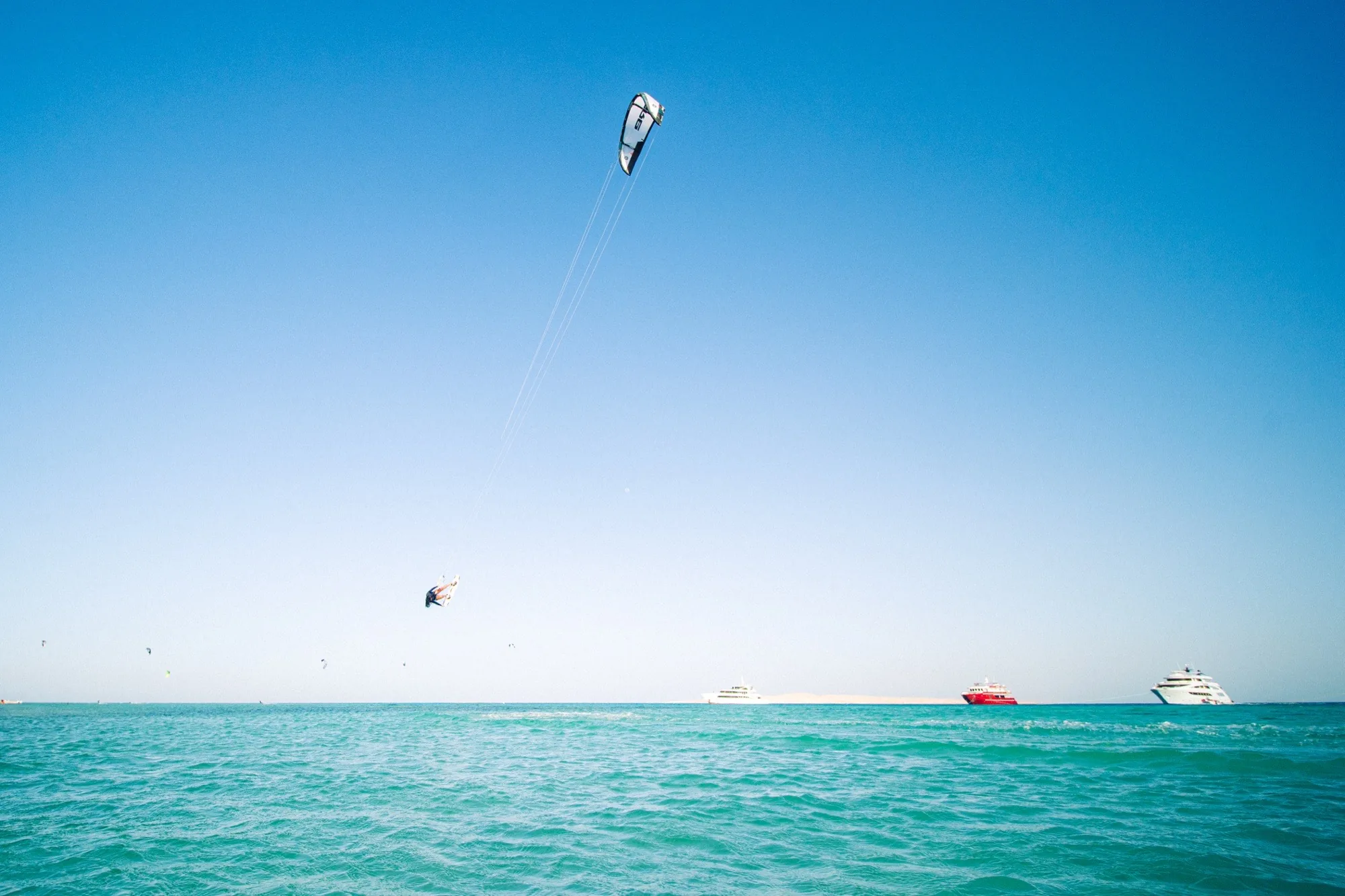
There is a particular feeling that comes from waking up at 6am on a liveaboard in the middle of the Red Sea. The desert air is still cool. The boat is anchored in a lagoon that does not appear on any tourist map. The water is so flat it looks painted. And by 7am, the thermal is already filling in — 18, then 22, then 25 knots of clean, consistent north-north-westerly wind. No waiting. No commuting. You launch off the back of the boat.
That is the core proposition of a Red Sea kite safari that is done properly: you go to the wind, sleep at the wind, and wake up at the wind. Everything else — the gourmet food, the pro coaching, the island barbecues — is what separates an ordinary week from the kind of trip you talk about for years.
The Red Sea: A Kiter's Natural Habitat
Egypt's northern Red Sea sits in a pressure corridor between the Mediterranean and the Indian Ocean. From May through September, a thermal wind system delivers 20–30 knots of north-north-westerly winds with a consistency that is almost mechanical. Water temperature stays between 25°C and 30°C year-round. The salinity is higher than the open ocean, which makes the water sit more naturally under your board.
For kitesurfing, this combination — consistent thermal, flat to moderate chop, warm water, minimal crowds once you leave the shore infrastructure — is close to ideal. The lagoons in the northern section are some of the flattest natural water in the world for freestyle progression. The open water builds a consistent swell that, in the right conditions, turns into legitimate big air territory.
Live Aboard: The Format That Changes Everything
A liveaboard kite safari is structurally different from any shore-based trip. When you are based on a boat, you move. Not just to the next lagoon down the coast — to the spot where the wind is cleanest today. Your captain reads the weather models overnight and repositions the vessel while you sleep. You wake up already there.
This flexibility is the single biggest advantage over land-based camps, and it explains why the best conditions on the Red Sea are consistently found by liveaboard riders, not land-based ones. The iconic spots on the Egyptian coast are accessible to anyone. The remote ones — unnamed sandbanks, private island passages, uninhabited reefs — require a vessel, permits, and a captain who knows which anchorages are worth the passage.
What a Typical Day Looks Like
A well-run Red Sea liveaboard day follows a natural rhythm:
- Early morning (6–8am): calm water, light wind — sunrise snorkelling or yoga on the deck if desired
- Morning session (9am–12pm): thermal builds; flatwater freestyle, technique coaching, video analysis
- Midday: lunch aboard, shade, rest — desert heat peaks between 12 and 3pm in summer
- Afternoon session (4–7pm): wind peaks at 25–30 knots; big air, high-performance riding, sunset session
- Evening: island barbecue or dinner aboard, social time, occasional night snorkelling
The Coaching Element
The reason to go with a small, curated expedition rather than a mass-market liveaboard is coaching. Not safety supervision — actual, technical coaching that advances your riding.
On the Local Secrets XP Egypt Red Sea expedition, we run a maximum of 8 riders with two coaches: Zac Adams and Yücel Paralık. Both have competed at a national or international level. Both have coaching philosophies that translate high-performance technique into accessible progressions regardless of your current level. The ratio of one coach to four riders is not industry standard — most liveaboards run one coach to eight to twelve riders. The difference in what you learn in a week is measurable.
The coaching structure typically runs: video analysis of your riding in the morning session, focused technique work in the afternoon session, and a group debrief in the evening. By day three, most riders are working on something specific that they will carry home with them.
Everything That's Included
A well-structured Red Sea kite safari is all-inclusive by design. The logistics of kitesurfing in a remote location — fuel for the zodiac rescue boats, equipment transport, safety equipment, permits for remote anchorages — are complex enough that a piecemeal approach does not make sense.
On the Local Secrets XP expedition, the following is covered from the moment you board:
- 7 nights / 8 days aboard a modern liveaboard vessel
- All meals, snacks, and non-alcoholic beverages
- Unlimited kite sessions with dedicated zodiac rescue support
- Pro coaching with video analysis
- Yoga and mobility sessions (morning, optional)
- Snorkelling equipment and guided reef sessions
- Island excursions and barbecues where conditions permit
- All maritime permits for remote anchorages
Who Is This For?
The Red Sea liveaboard format works best for riders who are past the beginner stage — comfortable riding upwind, able to self-rescue, and ready to push their progression. The coaching and conditions are calibrated for intermediates through advanced riders. If you are a complete beginner, a shore-based course is a better starting point; there is no point paying liveaboard rates when you are not yet at the stage where you can use the conditions.
If you are an intermediate rider who has been progressing slowly at your home spot and wants to make a serious jump in one week — this is the format that does it. The combination of excellent conditions, focused coaching, and complete immersion (no phone calls, no commuting, no distractions) produces real progression in a way that a week of occasional sessions at home simply cannot replicate.
Our 2027 Egypt Red Sea expedition
May 1–8, 2027 · 8 riders max · Zac Adams & Yücel Paralık